• Log In
  • Log In
Science Leadership Academy @ Center City
Science Leadership Academy @ Center City Learn · Create · Lead
  • Students
    • Mission and Vision
  • Parents
  • Community
    • Mission and Vision
  • Calendar

English 1 - Dunn - A Public Feed

Create a Post

  9th Grade English Launches You and the World!

Posted by Alexa Dunn in English 1 - Dunn - A on Wednesday, December 18, 2013 at 5:11 pm
Red and Orange 9th grade English students have begun their You and the World projects!  This year-long project asks students to take an interest in local, national, or international issues that they are willing to learn more about. They develop a passion for research, relay that knowledge and passion to others, and seek to educate themselves and those around them via public writing and a service component. 

Fueled by essential questions like, Why is this world issue important to me? How can I be a global citizen? How can change occur?, students will become "agents of change" for their issues in the Spring when they choose to do volunteer work, perform a civic action, or spread awareness through presentations and activities in our school community (including The Franklin Institute).

Students craft a series of blogs about their experiences going through the You and the World process. Please click on Red Stream  &  Orange Stream to read and comment on their first round posts. They would love to hear from you!!


globe-clipart3
globe-clipart3
Tags: Homepage
Be the first to comment.

YATW Blog #1: We love to litter

Posted by Ishmael Brown in English 1 - Dunn - A on Tuesday, December 17, 2013 at 7:50 pm

YatwBlogPost1 (2)h
Tags: Dunn, English, You and the World
Be the first to comment.

YATW Blog #1 The Casino Affect

Posted by Jun-Jie Zou in English 1 - Dunn - A on Tuesday, December 17, 2013 at 5:41 pm

YATWBlog1 (2)
Be the first to comment.

Educations for kids with Autism

Posted by Daouda Njie in English 1 - Dunn - A on Tuesday, December 17, 2013 at 9:13 am

youandtheworld
Please click here for my Annotated Bibliography
Tags: English Dunn You and the world
3 Comments

YATW: Blog #1 Excess Litter

Posted by Ishmael Brown in English 1 - Dunn - A on Tuesday, December 17, 2013 at 8:57 am

YatwBlogPost1
3 Comments

YATW Blog #1: Late Effects in Childhood Cancer

Posted by Imani Weeks in English 1 - Dunn - A on Tuesday, December 17, 2013 at 8:50 am

Hi, my name is Imani Weeks. I am a 9th grader at Science Leadership Academy. For English, we have started a year long project called You and the World (YATW). We had to choose a subject to write about in three blog posts and I chose childhood cancer. I especially focused on late effects of childhood cancer. Childhood cancer is something that people don’t like to talk about. I believe (and others might agree with me) that though those who have childhood cancer are some of bravest people and that they deserve to live. However, sometimes there are side effects to the treatment they receive to help battle the cancer cells.

      
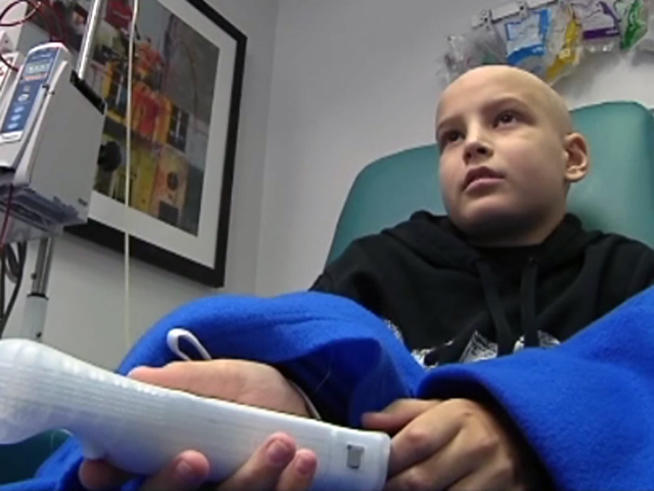
     Child undergoing chemotherapy 

First we need to talk about childhood cancer. Many children are diagnosed with cancer every year, 13,500 to be more exact. 1/5 children who are diagnosed do not survive. Though over the past 40 years survival rate has gone up from 10% to 80%. 3/5 children who survive suffer illnesses afterwards.
These illnesses after survival are known as late effects, late effects are caused by the chemotherapy. Some late effects are a second cancer occurring, the first cancer coming back, or heart and lung damage. It may seem like the odds are against you when 
you get late effects but kids and their family learn to cope. In 
the article, 
“For childhood cancer survivors, the gift of life can carry new challenges” some late effects statistics were noted: 

“St. Jude Children’s Research Hospital research shows that 80 percent of 
adults who beat cancer as kids have a chronic, perhaps life-threatening health condition by the time they reach age 45. More than half have heart abnormalities 
by that age. Another 65 percent have impaired lung function,and 48 percent have memory impairment.”

That means that most people go, for quite some time in their life, thinking they have beaten the odds then the late effects start to show; and it seems like most of these late effects are serious problems. Hopefully in the future, doctors will be able to find a way to use chemotherapy without the occurrence of late effects later in life so that when someone beats cancer, they beat it for real!

Be sure to read my next post!


Annotated Bibliography  

Tags: English 9, Dunn, You and the World
3 Comments

Introduction to Animal Cruelty and Adoption

Posted by Benjamin Fink in English 1 - Dunn - A on Tuesday, December 17, 2013 at 8:31 am

YATWBlog1DueTuesDec17 (1)
Tags: English 9, Dunn, You and the World
1 Comment

YATW: Sickle Cell Anemia

Posted by Dejah Smith in English 1 - Dunn - A on Tuesday, December 17, 2013 at 8:31 am


Hello, My name is Dejah Smith and I am a freshman at Science Leadership Academy high school. In my English class we are discussing topics that are going on in the world. I will be addressing Sickle Cell Anemia. Sickle cell anemia is a disease passed down through a family. When you have Sickle Cell your red blood cells are not shaped like a disc instead they take the shape of a sickle or a crescent shape.

There is one main cause of Sickle Cell anemia. It is caused by an abnormal type of hemoglobin, which is a protein inside of your red blood cells. This carries your oxygen. Sickle cell anemia is passed down to you when you have both parents with it.  Many people that are diagnosed don't live a very long life. On average a males lives to he is 42 and women until they are 48. Mostly dying from organ failure. 50 percent live to see their 5th decade.  

Some symptoms of  Sickle cell anemia is joint, back, leg and chest pain. These pains and or “crisis” can last up to days. Sometimes these pains are so bad you could be hospitalized. Other symptoms of this disease is fatigue, fast heart beats, and yellowing of your eyes and skin. Younger children tend to have pains and sometimes mini strokes. They also can have confusion with their thoughts. Due to spleen failure overtime victims of this disease start to have different types of infections.

There are many different treatments that's trying to cure this disease. The main thing they are trying to do is maintain symptoms and put a stop to the crisis. Something called Folic Acid. This creates new red blood cells for the victims. Blood transfusions and pain medicines.

To deal with the pain of this awful disease, they have support groups. That way everyone is mentally supported. This gives everyone a shoulder to cry on and someone to relate to.     


This picture shows how normal red blood cells look compared to blood cells that are infected with the Sickle cell anemia disease.
3 Comments

Alzheimer's & Dementia; The Unknown And Hidden Facts

Posted by Jamilah Woodards in English 1 - Dunn - A on Tuesday, December 17, 2013 at 6:37 am

    Hey, My name is Jamilah Woodards. I am currently a Freshman at Science Leadership Academy. In my ninth grade English class, we are currently working on a project titled, “You And The World” (YATW). The YATW Project allows you to choose a topic that you are highly interested  in to research and discuss. For this specific project, I chose the topic of Alzheimer’s and Dementia; The Unknown & Hidden Facts. This topic hits really close to home because my Grandmother was diagnosed with Dementia around the year of 2006. With that being said, I decided to base this project off of a disease that really affected my family and I.


  Alzheimer’s disease is very well known all over the world, but Dementia is somewhat forgotten. Although many people have heard of this disease, not many people know what exactly is Alzheimers and/or Dementia. The medical definition for Alzheimers as described on  www.medicalnewstoday.com, “Alzheimer's disease is a neurological disorder in which the death of brain cells causes memory loss and cognitive decline. A neurodegenerative type of dementia, the disease starts mild and gets progressively worse.” As briefly shown in the definition for Alzheimer’s, there is a difference between the two. Dementia’s medical definition found on a medical definition website stated as following, “Dementia is a loss of mental ability severe enough to interfere with normal activities of daily living, lasting more than six months, not present since birth, and not associated with a loss or alteration of consciousness.”


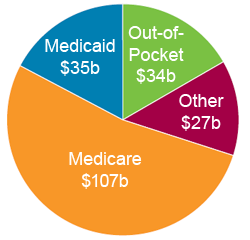
  Dealing with either of the two diseases can be very expensive. Yes, most insurances pay for portions of the costs and treatments, but the other portion is most likely put on the patient/their provider. A portion may not seem like it would be very costly because it is only a “portion”. Yet when Medicaid/Medicare is in the billions of dollars, that out-of-pocket portion can also be in the billions.


This picture shows the costs of supporting someone with Alzheimer's or Dementia disease


As seen in the chart above, about $142 billion would be the cost between Medicare and Medicaid. Although the cost that Medicaid provides on its own is just 1 billion dollars above the cost of personal money.


One stereotype about dealing with people who have these diseases is that they are completely unable to complete any tasks on their own. False. People believe that patients with Dementia cannot remember anything. That is also false. Since Dementia is basically a milder form of Alzheimer’s, it allows consumers to do some things that they can't. Although people with Alzheimer’s have more of a struggle than Dementia, it is still possible to do things on your own. They’re plenty of people out there who live a healthy life on a daily basis. Know that there is a mild and severe form of just about everything, so it all depends on the stage of your disease to know what exactly exceeds your abilities.   Check out the list of 5 Things You Should Know About Dementia to a further understanding.


Overall, Alzheimer’s and Dementia are diseases that should be even more now than they already are. They affect people and their families on a regular basis. I would like people to get to know and understand the stereotypes, costs, and know what the diseases actually are and do.


Blog #2 is on its way!!!


Annotated Bibliography


Tags: You and the World, Dunn, English, Jamilah
2 Comments

YATW: What the heck is a Baha'i?

Posted by Ayanna Lemon in English 1 - Dunn - A on Tuesday, December 17, 2013 at 4:15 am

BlogPost1
Tags: Dunn. English 9. You and the World.
3 Comments

YATW Blog post #1 Finding a Cure for Cancer

Posted by Gabrielle Cromley in English 1 - Dunn - A on Tuesday, December 17, 2013 at 2:27 am

Hello. My name is Gabrielle Cromley and I am a student at Science Leadership Academy. For my English class, we were asked to do a project called You and the World in which we were to write three blog posts about a subject that was important to us. We have to make a change in the world or the community to help benefit our cause.


I chose to write about finding a cure for cancer and how medical malpractice and lack of government funding is preventing researchers from reaching their full potential. This issue is meaningful to me because I lost my cousin to lymphoma cancer. He received a sepsis infection from the hospital and was never able to recover. Watching him suffer and holding his hand as he took his last dying breath made me realize that no one should ever have to go what he went through or die from the negligence of others. He was also my godfather and he has a special place in my heart so I want to do all I can to make sure that he receives vengeance against this illness. This is also an important issue to me because I want to become an oncologist one day and medical malpractice and cancer research would directly relate to this career.


Cancer is a disease that is caused by abnormal cell growth and reproduction rapidly. The cell’s DNA is damaged which causes the cell to not perform actions normally. There are many types of cancer that can attack parts of the body and spread throughout it. Cancer causes physical, mental, emotional, and financial suffering for patients and their loved ones. As stated by the World Health Organization, “It is the main cause of death worldwide. Deaths from cancer worldwide are expected to continually rise to an estimated 13.1 million deaths by 2030.” In the United States alone, cancer still causes a substantial amount of death, most of which should have never happened.


Amounts of new cancer cases and death


You may think a hospital is always the safest place for the sick, but this is not always true. Many hospital patients’ lives are prematurely ended due to infection which is caused by negligence, medical malpractice, and just plain carelessness. “More than 45,000 cancer patients die from hospital caused infections which also wastes $8.1 billion,” states Miriam Falco in “Hospital-acquired Infections Lead to Substantial Loss in Life and Wastes Billions” Since cancer patients have immune systems that are susceptible to disease and infection, more precautions and care needs to be taken in order for the patient to be safe. As described below by The National Center for Biotechnology information, patients who are unknowingly not responding to treatment are likely to receive an infection depending on their type of cancer.


The frequency of infection is related to the type of underlying neoplastic disease, and most   infections occur in patients who are no longer responding to the therapy of their neoplasm. About 80% of patients with acute leukemia, 75% of patients with lymphoma, and 50% of patients with multiple myeloma develop infection during the course of their disease, and infection is the proximate cause of death in a substantial fraction of these patients.

If doctors are unknowledgable to the fact that a patient is unresponsive, it could cost the patient his or her life. To learn more in depth data about infections in cancer patients click here.


A patient can also die or get worse due to chemotherapy or radiation treatment. Chemotherapy and radiation are harsh treatments that greatly affect the body, and for some people the effects can be deadly. Click here to read more about these therapies and their effects in “Death by Doctoring”.  We should not limit ourselves to to only two main types of treatment. Through research, we can possibly find a more efficient treatment and maybe a cure.


The last obstacle that has to be faced before a cure can be found is government funding towards cancer research and for that matter all types of scientific research. According to  The United States government only gives 2% of their budget to all scientific research. Chief medical officer, Richard L. Schilsky said, “This trend could potentially devastate future cancer research, just when we are on the verge of achieving major progress against cancer and identifying the next generation of effective cancer therapies.” Science is the door to the future that holds advancements and new opportunities that can help our world and we are going to disregard findings that could save lives. Also, cancer research is very expensive along with other forms of scientific research. Research cannot be conducted if there is no money to pay for what is needed. You cannot put a price on a life, which is why we as a country should do everything we can to help cancer patients out of their pain and suffering.


Graph of the United states budget


Bibliography


Tags: Dunn, English, You and the World
3 Comments
73 posts:
← Prev
  1. 1
  2. 2
  3. 3
  4. 4
  5. 5
  6. 6
  7. 7
  8. 8
Next →
RSS

ENG1-013

Term
2013-14

Other Websites

Launch Canvas

Blog Tags

  • You and the World 16
  • Dunn 16
  • English 12
  • English 9 5
  • English 9, Dunn, You and the World 5
See all See less
  • YATW
  • Red Stream
  • Dunn. English 9. You and the World.
  • English Dunn You and the world
  • Homepage
  • You in the World, English 9, Dunn
  • Youth Athlete Concussions
  • Jamilah
  • Lack of Art

Teacher

  • Alexa Dunn
Science Leadership Academy @ Center City · Location: 1482 Green St · Shipping: 550 N. Broad St Suite 202 · Philadelphia, PA 19130 · (215) 400-7830 (phone)
×

Log In