Jobe & Ali
Link To Video:
Link To Google Doc:
Link To Video:
The woman adorns her face in make-up, covers herself in perfume, removes all “unnecessary” hairs, puts on a most flattering outfit and enters the field. The man grooms himself, applies a hearty amount of cologne, and drapes himself in his finest clothing, entering that same realm. These are the stereotypical, if abbreviated, versions of preparation each human gender takes to make themselves a viable option for the opposite sex, a process that has only gotten more complex. Yet despite the understood belief, this is not the only species that undergoes such strenuous enticement methods. It exists everywhere regardless of the harm it may cause!
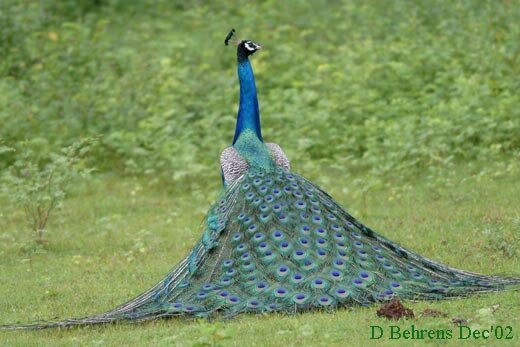
A grand example would be the peacock. This lovely creature is known for its noticeable plumage, an addition that both attracts the opposite sex as well as makes them a target for any predator on the prowl. This attachment has remained despite the danger it poses because of the higher probability of being chosen by the females for the proud honor of fatherhood. (No female can resist beautiful plumage.)
But why pick the incredibly-feathered peacock ? Or the cologne laden
male? It can all be attributed to the implication. The female peacock will pick
the male because if such a gentleman could survive despite the hindrance the
tail causes and maintenance energy it requires, the female can safely assume
this fellow is of a strong caliber and in possession of a quality genotype. This choice of the
fittest mate, despite its troublesome side effects, is necessary in ensuring
the peacock’s survival. Now if we look to humans, it must be acknowledged that
there are somewhat more complex methods put in place but it is the same at
heart. By primping oneself, it also implies the same strength and quality
genome as the peacock feather. But here lays the greatest difference: humans
have evolved the ability to mislead quite a bit better, meaning that such preparations may cover up an unflattering truth. (A thing no peacock can muster.)
(http://www.haryana-online.com/images/Birds/David/Peafowl_3.jpg)
On a final note, the lady’s choice in mate is also chosen in consideration to the way their offspring will come out. A female will choose an attractive mate to give birth to others who will prove just as attractive, to ensure they will also be chosen. However, in the case of the male peacock and countless other species, these “attractive” traits are detrimental to their continued existence, yet they are chosen nonetheless. Oh how curious it is…
Hewett, C. (2003). Theory of sexual selection- the human mind and the peacock's tale. The Great Debate,
Huk, T, & Winkel, W. (2008). Testing the sexy son hypothesis- a research for
empirical approaches. Oxford Journals, 19(2), 456-461.

Co-evolution is how to species coexist in order to survive because no matter what species we are talking about we know that at one time it has caused another to either species to change the natural selection of another. Such as the common example of predator vs. prey:

Birds and plant
coexist because one can’t survive without the other, with a bird who eats the
flower or fruit from the plant, they get the nourishment they need in order to
survive, while the plant started to produce regurgitating seeds for which the
bird had to evolve, so the plant would find a way to share its seeds to grow
more plants. They evolved to different types of birds to make sure they know
where the plant would be.
http://biomed.brown.edu/Courses/BIO48/27.Coevolution.HTML
http://www.pbs.org/wgbh/evolution/library/faq/cat08.html
The thumb is arguably the best adaptation humans have. We don’t think about it, and we take if for granted, but the thumb is used everyday, and makes things so much easier. However we didn’t always have thumbs, nor are we the only ones who have them. The first actual record of a thumb, was back when the Dinosaurs roamed the Earth, the most known is probably the iguanodon. So thumbs have been around for a long time, even sauropods that walked on all 4 legs seemed to have some resemblance in their feet to a thumb bone, But what about with humans?
The world in which we live in has many mysteries. One of the things we never think about is how we first became meat eaters. It is said that the first meat eating humanoids date back 2.5 million years ago. That is just long enough to teach us everything we know about the animals we eat, and possibly even change throughout evolution because of it.
There are many reasons why a person would need to include new things into their diet. One of those reasons is survival. Scientist Patricia McBroom of the organization, Public Affairs gave their reason behind why human ancestors began to include meat.
“Human ancestors who roamed the dry and open savannas of Africa about 2
million years ago routinely began to include meat in their diets to
compensate for a serious decline in the quality of plant foods”, University of California, Berkeley. 2 million years ago the loss of some plant life was said to be among the Earth. With
the Ice Ages end different plant life was killed, and humans were left
were hardly any plant life in which they felt contained the nutrients
they believed they needed. This led to a diet of meat,
which was full of nutrients that provided help through human evolution,
for example the growth of the brain.
Interviewee: Of course I do.
Me: Was it a challenge at all getting here today?
Interviewee: No.
Me: Do you think it would be any easier if voting was on a different day?
Interviewee: No, it doesn’t matter to me what day it is.
Me: Okay, it doesn’t conflict with work or anything?
Interviewee: No, because you can come from eight in the morning until eight at night, and I live around the neighborhood so it’s easy to walk over.
Me: Do you know why they have voting on Tuesdays?
Interviewee: No, I don’t. That’s a very good question.
Me: Okay. Thanks!
Interviewee: You’re welcome.
According to this idea of natural selection humans are still around today because of the adaptations we have developed as time has pasted. We use almost everything on our bodies to “survive” in this world, and to keep our species going. Sometimes though these certain adaptations we have acquired over time have stopped being about surviving. We stopped worrying about what could continue our species and began to only focus on our own wants and needs.
Women overtime have formed a certain shape that we call an, hour glass figure. Consisting of broad hips, big chest, and small waist, we have classified this adaptation as normal. Many people attribute wide hips as a great necessity for child baring. Meaning a women with bigger hips are more suitable to bear tons and tons of children. But that mind set has changed, and not only because of time but because of cultural differences.
In an article in the Telegraph written by Andrew Hough, “..a man was more attracted to a woman based on the size of her waist compared with her hips.” Which is not always true. In a study done by Women’s-Health.com 80% of the men tested preferred slim women. But according to evolution, a women of a slim stature would not be suitable for bearing children. So why would some men prefer this? Something that could mean the possible end of our species because of a halt in reproduction. This has also been proven to me when talking to my fellow classmates. Some boys talk about their love for a girl with amazing curves, and with smallest waist. While other boys gush over slim and trim girls. This proves that over time, we stopped caring about the aspect of reproduction and only the satisfaction of attraction.
Climate and environmental change are major parts of the evolution of species. If the environment changes the species generally either adapts to fit that change and becomes a new species or dies off. This is part of nature and always will be as long as there is life. So this brings up the question, if extinction is part of evolution, what is the point of protecting a species?
There is no point to this actually. All it does is change how the species evolve or make it take longer for them to die off. However people find it necessary to fix these mistakes that are causing the extinction of species. However, the way to protect species isn’t to have them grow inside, being kept from living in the wild, it’s to fix the problems that human beings have caused by fixing what’s been done to the environment.
However to argue against that, there is the point to be made that many endangered species are national or state symbols, like the bald eagle. There’s also the fact that many species are only able to survive inside because they’re environment has changed so drastically.
Overall this topic is something that is easily debatable from both sides. Possibly the simplest explanation of what the point of protecting species is, is that people find it necessary to find an immediate solution to the problem caused but don’t realize that the long term solution is the better one.
The evolutionary process is relatively simple; if something about ones biology helps them to survive and thrive over others, then that trait will be passed down through their DNA sequence and those without it will slowly die off. This then begs a basic question:
How come our taste buds haven’t evolved to appreciate the taste of fruits and vegetables over sugars?

In
most cases, obesity is a product of eating many foods that are unhealthy. Those
with obesity have a much higher susceptibility to many illnesses such as
diabetes. Since this is true, wouldn’t those with a liking for fruits and
vegetables and a dislike for sugars be reproducing more leading to a decline in
obesity?
However, this is not the case, at least not yet. Only in the last couple hundred years of our history have we been able to obtain sugars whenever we get a craving. For the large majority of human history, our only natural sources came in small dosage along with whatever naturally produced food the sugars resided in (usually fruits). If we look at the problem this way, then we can make the prediction that if our eating habits continue like they have been over the last 100 years, obesity will eventually cease to exist.
The book, In Defense of Foods, Michael Pollan writes, "Sugar has it is ordinarily found in nature-in fruits and some vegetables-gives us a slow-release form of energy accompanied by minerals and all sorts of crucial micronutrients we can get nowhere else. One of the most momentous changes in the American diet since 1909 has been the increase in the percentage of calories coming from sugars, from 13 to 20 percent."
Why do we still crave sugars?
We still crave sugars because it takes hundreds of generations to evolve. We are still in the early stages of evolution when it comes to our new agriculturally sound diet. In due time, we will probably start to enjoy all foods equally and just proportion them so that we get the correct dosage of each every day.
Sources
http://blsciblogs.baruch.cuny.edu/mpenaz/files/2010/09/taste-6.gif
http://mikesmixrecoverydrink.com/wp-content/uploads/2010/09/sugar.jpeg
In Defense of Food, Michael Pollan
In my advanced art class, my teacher Mrs. Hull assigned a project where students had to recycle everyday materials and use them in a creative way. Our class was inspired by the artist Aurora Robson, who used bottle caps to create unique sculptures. She used her creativity not only to make something interesting and unique, but also to create something environmentally friendly. Our art class wanted to produce something that was not only imaginative, but that also did something positive for the environment.
For my first quarter art project, I decided to make a picture frame with a picture inside of it. The picture frame itself is made out of an Abercrombie and Fitch shopping bag, while the inside of the frame is made out of the tissue paper used to cover the inside of presents. People are always recycling bags, so I wanted to do something different and recycle tissue paper. The inside of the picture frame is a picture of how the earth will look if we don't recycle: empty and ruined. I constructed the globe by cutting up the bottom of several water bottles and then taping them all together, making a somewhat round figure or sphere.
The tissue paper in the project is around the globe and is supposed to represent the space. The tissue paper is loose and colorful, and even though space is dark, I wanted it to be bright and colorful, to show a contrast between it and the darkness of the earth in a non-recycled future. Basically I switched the roles so the earth is dark and dismal, while space is colorful and vibrant.
Overall I very much enjoyed working on this art project. I try to be as environmentally friendly as possible and creating this picture frame was a way to incorporate school work and the environment.
Sources
http://www3.nsta.org/main/news/stories/science_and_children.php?news_story_ID=49036
http://www.wordiq.com/definition/Opposable_thumb
How have some animals evolved wings?
When learning about evolution, someone might wonder about how irreducibly complex parts of animals, such as wings, have evolved. A wing only works when there is an entire functioning wing. So this brings up the question, how does an animal without wings evolve into an animal with wings? The most reasonable explanation would be that wings began evolving with a slightly different purpose.
Theropods that lived in the trees would get around by jumping from branch to branch. If they missed the jump, they could fall out of the tree and die. These theropods evolved into birds. According to discovermagazine.com, birds and theropods both "Have three bones that appear to have evolved from the digits on a common five-fingered ancestor." A theropod with a small flap of skin between its fingers would have a slightly larger surface area when jumping between branches and that would decrease the chance of it falling. Through generations, that skin flap became larger and eventually evolved into a functioning wing where the animal could flap it's wings and fly away.
If I were to do further research, I would want to look into birds that don't fly, like penguins or emus. If they can't fly, what is the purpose of having wings?
Sources:
The Blind Watchmaker by Richard Dawkins
Evolution, evolution is a very touchy subject. It is also a very debatable subject in regards to many different things and the way that they’re taken. But it is something that I personally find very interesting. There’s something that I question actually and it’s not exactly on topic of evolution but instead of an occurrence, extinction. We all know that extinction is the dying off of something, but specifically in this case species. So my question is, if extinction is so posed to be a natural part of life on Earth, why should we care about protecting endangered species?
Humans are known to be of a complex species, however it is no mystery that Homo sapiens (humans) are also categorize as mammals. There are many components and characteristics that define a mammal; hair being on of them. Epidermal in origin, hair is made up of a complex structure. Mammals are the only animals in which hair is found on. Even "hairless" mammals, such as pigs, elephants, dolphins, and other cetaceans (another word for marine mammals) are partially covered with fine short hairs. Hair has many functions within itself. The many functions of hair include the retention of heat, attraction of mates, protection of skin, sexual dimorphism, an absorption of sunlight and, in the case of pets, the elicitation of a protective response from humans (us). Now how is it that humans and animals, all mammals, differentiate in how the hair is actually presented on their bodies? Though humans are covered in hair completely, they are not covered to the extent that animals are. This is because mammal body hair is an evolutionary enigma.
The common belief of hair evolution is that hair
evolved to help retain body heat since hair is an excellent heat
insulator. But there is no conclusion as to which evolved first: hair
or warm-bloodedness (endothermy). Researchers verbally combat between
the two all the time. Most ‘Darwinists’ believe that humans evolved in
Africa along with other primates, all of which were almost totally
covered with thick fur (again, hair). As such, a common view is that
now the body hair of men and women are purely vestigial, a useless
evolutionary leftover from when we were ape-looking animals. Initially hair arose as surface insulation, retaining body heat in primitive
mammalian endotherms.
The reason for the putative issue
of human hair loss in evolution is still unknown, and all the explanations and reasoning proposed are
contradicting.
Harrub, Ph.D. Brad "Why do Humans Lack the Abundant Hair of Apes?", Article. Web. 2003. Nov 2010.<https://www.apologeticspress.org/articles/2345>
“Human Thermoregulation and Hair Loss,” Article. Web. 2003. Nov 2010. <http://www.modernhumanorigins.com/>
Bergman, Ph.D. Jerry " Why Mammal Body Hair is an Evolutionary Enigma" Article. Web. 2004. Nov 2010. <http://www.creationresearch.org/crsq/articles/40/40_4/Bergman.htm>